Can AI Replace an Overnight Security Guard? Not Replace — Relieve
A recent industry piece asked the question every site manager quietly wonders about at 2am: can AI actually replace an overnight security guard? Our answer, after building the machines that do the overnight rounds, is more precise than a yes or no. AI doesn't replace the guard. It replaces the part of the job that was never really about being human in the first place — and gives the humans back the part that is.
A recent industry piece asked the question every site manager quietly wonders about at 2am: can AI actually replace an overnight security guard? Our answer, after building the machines that do the overnight rounds, is more precise than a yes or no. AI doesn't replace the guard. It replaces the part of the job that was never really about being human in the first place — and gives the humans back the part that is.
The shift nobody wants, covered by something that never calls in sick
Overnight security posts break down for a boring, predictable reason: turnover, overtime, call-offs, no-show backfill. It's not a training problem or a vetting problem — it's a staffing-math problem, and it hits hardest in the hours nobody wants to work. A missed round at 2am on a wet Tuesday isn't a hypothetical. It's the normal outcome of asking rostering to solve a physics problem.
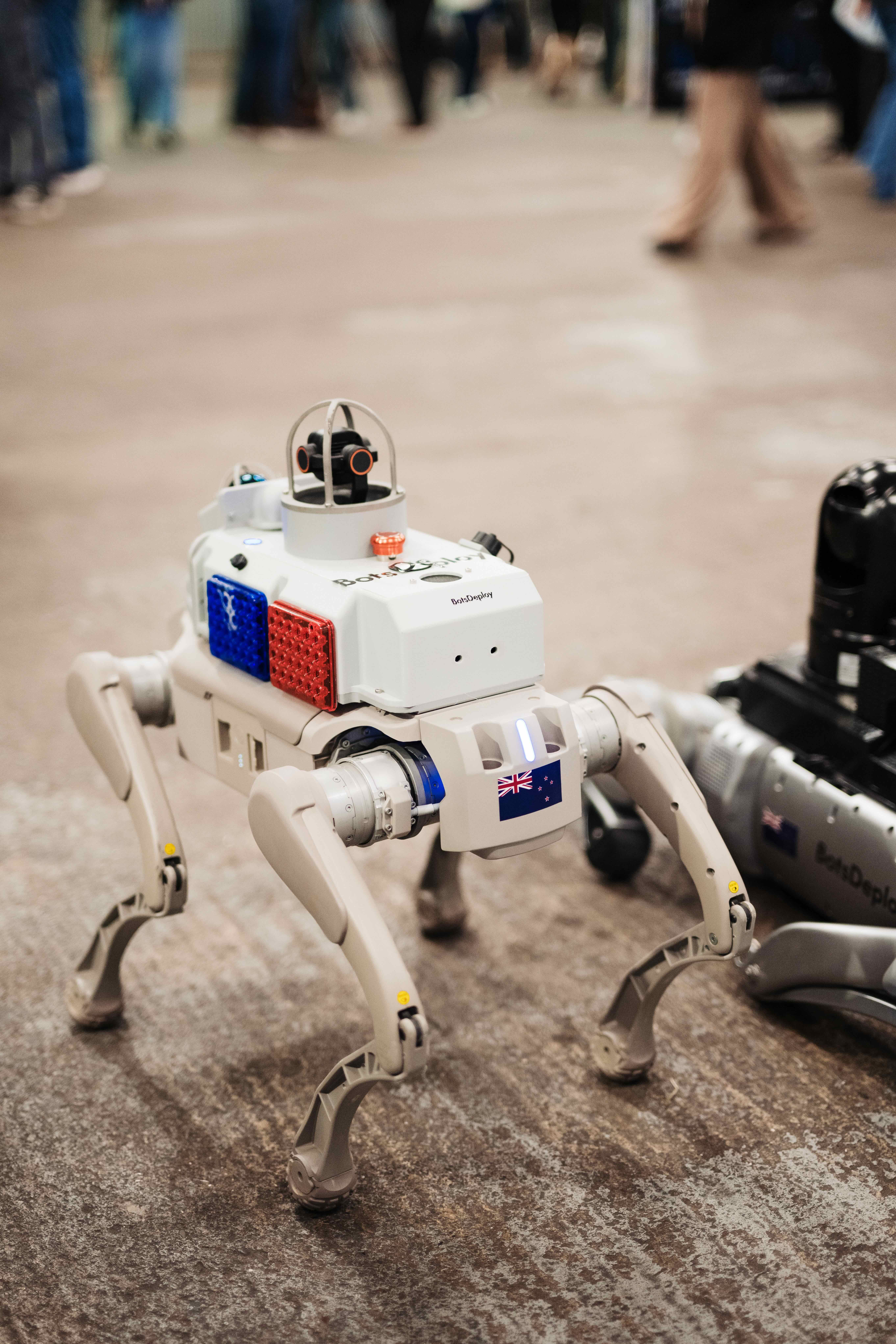
Our security robot dog doesn't solve rostering. It removes the need to. It walks the same route, to the same standard, whether it's 2am or blowing a gale — behind the plant room, down the stockpile lanes, along the back fence line the fixed cameras were never angled to see. It logs every pass. It doesn't shorten the round because the weather turned, and it doesn't need a supervisor to check that it showed up.
What's actually routine — and what isn't
Most of an overnight shift is structured and repeatable: patrol a route, watch a feed, verify an alarm, write it down. It consumes the majority of the hours and produces a small fraction of the actual incidents. That's the part suited to a machine, and it's the part our platform is built for — perimeter breach, unauthorised vehicles after hours, open gates and unsecured doors, personnel in restricted zones without PPE. The onboard AI classifies what it sees, filters the wildlife and the wind-blown rubbish, and only escalates what a person needs to act on. Your control room gets alerts, not noise.
What doesn't belong to a machine is everything that follows a genuine event: locking down a site, escorting someone off it, de-escalating a person who shouldn't be there, making a judgment call with real consequences. That's still a human decision, made by a human who's been woken up by a verified signal instead of a false alarm at 3am for the fourth night running. Coverage stops being about who's rostered and starts being about who actually needs to respond — which is a better use of your best people, not a smaller role for them.
From cost-per-hour to cost-per-outcome
The economics change along with the task split. A guard on a fixed shift is a cost per hour, whether the night produces zero incidents or three. A patrol platform shifts the number you're actually managing to cost per verified, resolved incident — and it hands you a 90-day dataset to prove it: detection-to-response time, the ratio of verified to false alerts, incidents closed without a dispatch, coverage hours logged against your highest-priority zones, and the overtime and backfill spend it took off the roster.
That's also where our platform does something a guard on foot can't. While it's walking the perimeter it's reading gauges, checking thermal signatures on switchgear and motors, spotting leaks and steam, flagging equipment drifting out of range. The patrol you bought for security quietly becomes your inspection data too — Get Started, Get Data, Get Value, in one deployment instead of two.
Serenity is the point, not the sales line
For an industrial site, the value of an AI patrol is measurable: fewer people in hazardous terrain at night, an audit-ready log, alerts that mean something. For an estate, a gallery, or an executive campus, the value looks different but the mechanism is the same. The requirement was never more guards at the gate — it was certainty and discretion, and a response that begins before anyone knocks. A robot dog on a scheduled or on-demand patrol, feeding a live view and a two-way voice channel back to whoever's watching, delivers exactly that: presence without intrusion, protection you don't have to think about. That's serenity — not as a mood, but as an operational result.
The honest version of the answer
AI isn't replacing the overnight security guard. It's replacing the overnight guard's least human hours — the ones spent walking a fence line in the dark, watching a static feed, filing a report nobody reads — and returning the guard's judgment to the moments that actually need it. Sites that make this shift aren't running with less security. They're running with the same people pointed at the problems only people can solve, and a machine on the fence line that never calls in sick.
---
Send us your site plan and patrol schedule — we'll map the route and show you what a night of coverage looks like.